

Why Characters Should Make Things Worse

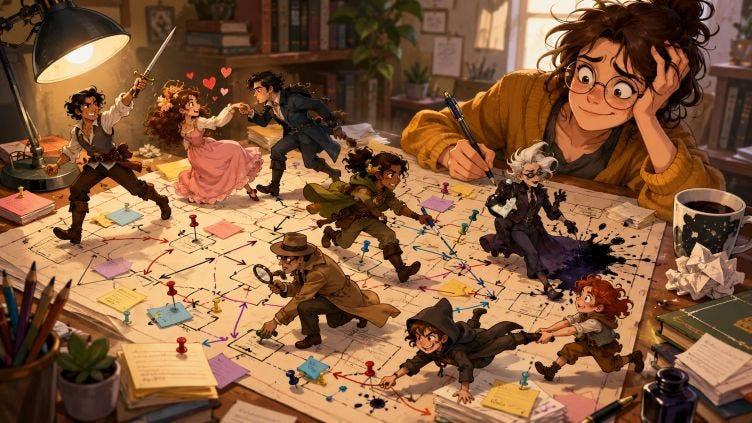
A sensible character can ruin a perfectly good story.
That sounds unfair. Sensible people are useful in real life. They check the weather, read the instructions, keep batteries in the torch, and decline invitations to suspicious dinners in isolated houses where every guest has a motive and the storm has already started. Isn’t that right, Pauline?
Admirable behaviour.
Terrible for fiction.
Stories need trouble. Not random trouble, not a meteor landing in chapter twelve because the writer got bored, but trouble with roots. The best problems usually grow out of character. Someone wants something too much. Someone is afraid of the wrong thing. Pride gets in the way. Loyalty points in a dangerous direction. A secret looks safer than the truth, at least for the moment.
That is where things become interesting.
Good characters should not make things worse because they are stupid. That gets old very quickly. They make things worse because they are human, or close enough. They carry old wounds, bad habits, blind spots, private loyalties, and beliefs they have never properly examined. Put them under pressure, and all that lovely baggage starts falling out of the overhead lockers.
This is why the most frustrating choices in fiction are often the most believable.
A character keeps quiet to protect someone, and silence turns into suspicion. Another refuses help because accepting it feels too much like surrender. Someone else tells the truth, but does it at the worst possible moment. A clever person misses the obvious because it sits too close to an old hurt. A loving son tells half the story to spare his mother, and half a story breeds a whole litter of problems.
From the outside, the reader may see disaster approaching. “Oh no,” we mutter. “Don’t do that.” Then they do.
If the moment has been earned, we do not throw the book across the room. Well, not permanently. We keep reading because the choice makes terrible sense. Given that person’s fears, loyalties, pride, hopes, and limited information, the mistake belongs to them.
That is the sweet spot.
There is a big difference between a character making a believable mess and a character behaving like an idiot because the plot needs another chapter. Readers can smell that from a long way off. They will forgive a mistake. They may even enjoy a spectacularly bad decision. But if a competent person suddenly forgets how doors, phones, weapons, gravity, or conversation work, the story starts to creak.
Motivation matters.
Before a character makes things worse, the writer needs to know why. What are they trying to protect? What truth are they avoiding? What do they misunderstand? Which old fear is louder than common sense? What do they gain by staying silent, lying, walking away, pushing too hard, or refusing to listen?
Once those answers are clear, the bad choice stops feeling like a trick and starts feeling inevitable.
That is when characters become engines.
A plot imposed from the outside can feel mechanical. Explosion here. Betrayal there. Convenient overheard conversation just before the chapter break. But when the mess grows from character, the story gains weight. The trouble is no longer decoration. It is consequence.
The proud character refuses help, and that refusal changes the outcome.
The loyal character protects the wrong person, and somebody else pays for it.
The cautious character waits too long, then discovers that delay is also a decision.
Those choices leave marks. They should. A secret becomes harder to tell. Trust cracks. An enemy gains time. A rescue becomes more dangerous. One lie demands another. By the time the truth finally drags itself into the light, it has mud on its boots and several unpaid bills.
Lovely.
For the writer, the useful question is not, “How can I make this worse?” That can lead to cheap drama, and cheap drama smells faintly of soap opera and desperation.
A better question is, “What would this person do that seems right to them and wrong to someone else?”
That opens doors.
A mother may see protection where her child sees control. A commander may see discipline where a subordinate sees cruelty. A lover may see sacrifice where the beloved sees betrayal. A friend may think silence is kindness, while the person kept in the dark feels robbed of choice.
Nobody has to twirl a moustache. Although villains are welcome to do so if they brought their own moustache.
The strongest conflicts often come from people who are not trying to be awful. They mean well. They are scared. They are proud. They are tired. They are protecting an old bruise. They think they understand the situation, and they are confidently wrong.
That kind of wrongness is gold.
It also helps relationships avoid the dreaded cardboard quarrel. You know the one. Two people who could fix everything with a five-minute conversation instead spend half a book refusing to speak because the plot requires sulking.
No, thank you.
A good misunderstanding needs roots. One person hears the wrong thing because it confirms an old fear. Another withholds information because telling the truth would expose something tender. Someone asks for honesty, then flinches when it arrives. Someone wants trust, but keeps testing it until it breaks.
Now the conflict has a pulse.
Not every character should create trouble in the same way. A whole cast of impulsive hotheads becomes exhausting, like being trapped in a room full of toddlers with access to explosives. Variety matters. One person acts too quickly. Another delays. One talks when silence would be wiser. Another stays silent until silence becomes a weapon. Someone clings to rules. Someone else treats rules as decorative suggestions.
Different flaws create different damage, and damage is useful, provided it matters.
If a character makes a mess and the story politely tidies it away, the reader notices. Consequences are what give mistakes weight. The wrong choice should change the next scene, or the next relationship, or the next danger. It does not always need to cause disaster, but it should cost something.
That cost is where character deepens.
A person under pressure reveals what they value. The mask slips. The joke fails. The polished answer disappears. Someone who seemed brave hesitates. Someone timid takes a stand. Someone decent does a cruel thing for a reason they can defend, at least to themselves.
Those moments are why we read.
A tidy plot can carry us from beginning to end. A character-driven mess leaves footprints. It breaks furniture, produces awkward apologies, stubborn silences, and consequences that arrive carrying luggage.
Much better.
Characters should make things worse because trouble tests them. Not because the writer needs padding, and not because everyone has to behave badly for drama to exist. They should make choices that grow from who they are, then live with the fallout.
Let them protect the wrong person.
Let them trust the wrong evidence.
Let them say the right thing too late.
Let them mean well and cause havoc.
Then make them deal with it.
That is where a story stops being a neat row of events and becomes something alive.
Besides, if everyone behaved sensibly from the start, half our novels would be pamphlets.
If you enjoy stories where good intentions, dangerous loyalties, secrets, and stubborn pride make everything worse, The Iron Admiral: Conspiracy may be your sort of trouble.
Allysha Marten is caught in a web of politics and military ambition, where almost everyone has an agenda and the truth arrives carrying a great deal of baggage. Admiral Saahren knows the truth. Getting Allysha to listen is quite another.
Which is excellent for the story.
Less excellent for Allysha.
The Iron Admiral: Conspiracy is free from my store, so you can step into the mess without risking anything except sleep.
Download it here: https://payhip.com/b/zypre
LOL! You are totally correct, Greta. Donald Maas, in his WRITING THE BREAKOUT NOVEL suggests asking yourself, "What would your character NEVER do?" and then, "What would make them do that?"